About Course
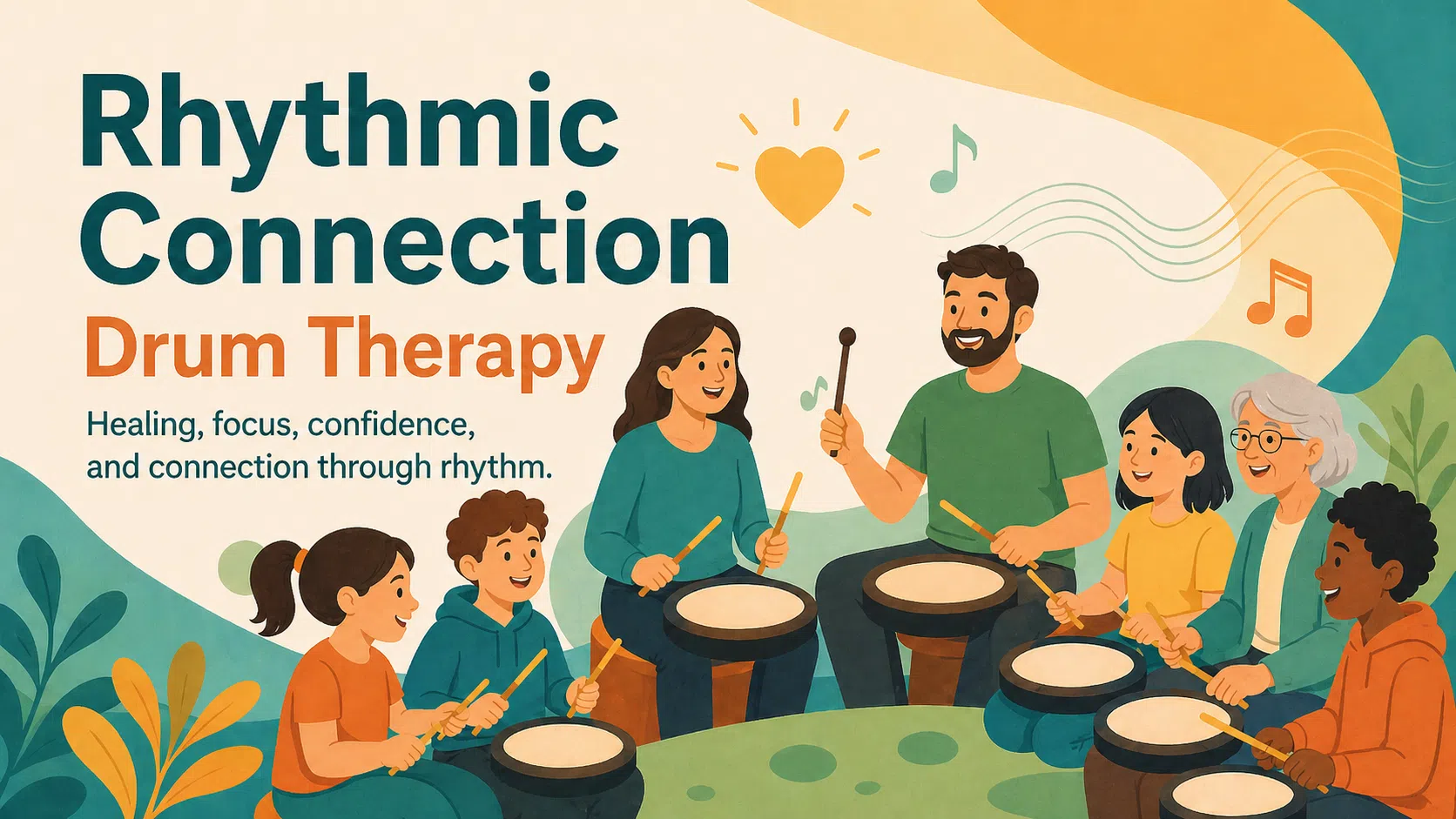
At Zenith Music Lab, we believe rhythm is a universal language that heals, connects, and empowers. Our specialized Offline Rhythmic Connection courses*, drum therapy sessions* are designed to provide a high-sensory, tactile experience for individuals and groups alike. Using our custom-engineered drum pads and hand-built right here in our lab, we facilitate a unique environment where participants can explore self-expression and motor coordination. Whether we are working with local schools, senior centers, or specialized autism support groups, our goal is to use the power of the rhythm to build confidence and community.

Real Effects: How You’ll Feel
Participants often walk in carrying the weight of the week and walk out feeling completely revitalized and rejuvenated.
Lighter: As if a physical weight has been lifted from your chest.
Mentally Sharp: That “brain fog” often dissolves into a state of calm clarity.
Emotionally Resilient: A sense of “inner quiet” that stays with you long after the drumming stops.
Creatively Fulfilled Non-Verbal Expression: For those with trauma or neurological conditions like Alzheimer’s, drumming provides a pathway for emotional motor output. It allows the brain to process and release emotions that the prefrontal cortex (the speech center) may not be able to articulate.
Health & Neurological Benefits*
Zenith Drum Therapy is built on a foundation of peer-reviewed science. We don’t just play; we practice a holistic approach to wellness that benefits the body and mind simultaneously, some health benefits include:
Neurological Grounding (ADHD & Autism): Recent fMRI research shows that drum training strengthens functional connectivity in brain regions responsible for inhibitory control and self-regulation. For students with ADHD or Autism, drumming acts as a “sensory anchor,” training the brain to maintain focus on a single event. [Source: PNAS Study on Drumming and Autism]
Accessible Physical Training: Drumming is a high-energy cardiovascular activity. Research from the Clem Burke Drumming Project highlights that rock drumming requires physical exertion comparable to professional athletes, offering an accessible way to manage weight and improve circulation, even for those with limited mobility. [Source: University of Essex / Clem Burke Drumming Project]
Cognitive Resilience & Memory: Studies have found that drumming stimulates “musical memory” regions that often remain intact in patients with Alzheimer’s and Dementia. This rhythmic engagement improves mood, reduces agitation, and provides a pathway for non-verbal emotional expression. [Source: NIH – Music Therapy and Alzheimer’s Disease]
The Science Behind Drum Therapy
Rhythmic drumming can induce Alpha and Theta brain waves. These frequencies are associated with deep relaxation, heightened creativity, and meditative states. By “entraining” the brain to a specific beat, drumming can bypass the chaotic “Beta” waves of a stressed mind. Hemispheric Synchronization: Drumming requires the use of both hands in coordinated patterns. This activates both the left and right hemispheres of the brain simultaneously, improving cognitive function and strengthening the corpus callosum (the bridge between the two sides).
*Important Disclaimer:
Rhythmic Connection — Drum Therapy by Zenith Study Lab / Zenith Music Lab is an educational, enrichment, wellness, and rhythm-based creative expression program. It is not a medical course, medical treatment, diagnostic service, clinical therapy, mental health service, or substitute for care from licensed health care professionals. We do not diagnose, treat, cure, or prevent any disease, disorder, disability, neurological condition, developmental condition, or mental health condition. Individual experiences may vary, and no specific physical, emotional, cognitive, behavioral, or health-related outcome is guaranteed. Any references to research or wellness benefits are provided for general educational purposes only and do not imply endorsement by any medical agency, university, research institution, or government organization. Participants with medical, sensory, behavioral, mobility, neurological, or psychological concerns should consult a qualified professional before participating.
Course Content
Drum Therapy 1: How Rhythm Connects Us
Drum Therapy 2: Techniques and Drummer History
Student Ratings & Reviews